Tuesday, May 16, 2023

Otter Creek

Otter Creek

May 11th and 12th, 2023


Sorry for the delay in posting this blog ... it was all written up, but we have not had cell phone service at our campsites for a while.


We arrived at Otter Creek State Park in the late afternoon.  The campground of the park runs along the side of the lake, which seemed quite nice.  Unfortunately, the other side of the camping area is right up against the road.  The road is not excessively busy but it is very fast!  Having found our site, we started to set up the tent.  Once again the wind was quite forceful and we had a bit of struggle with Big Agnes. We had dinner and investigated some of the bird life on the lake before retiring for the night. The weather had looked a bit threatening with bands of cloud moving over.  Quite unexpectedly, the temperature plunged overnight.  We both struggled to add enough layers to our bedding to stay warm.  We awoke to find a hard frost on the top of the stove case!   This was the coldest night so far.


With so much water nearby, there were plenty of birds around the campsite.  The many swallows darting across the sky made for a distracted breakfast.  We explored the outflow from the lake and were rewarded with a close-up view of a Clark’s grebe.  Most of the morning was spent birding, including a drive to the south where we saw a nest with a bald eagle and later, a golden eagle.


We returned to the campsite and hit the showers, trying to take advantage of the warmest part of the day.  In the afternoon, we drove to Piute state park where we found some shade at picnic table.  This brings me on to the topic of picnic tables...


Traditionally, the picnic table was made of a frame that supported a top composed of several wide wooden boards.  The bench seats were also made of wood.  These tables had certain advantages—a plastic shopping bag handle could be stretched over one of the boards of the tabletop thus creating a suspended trash bin.  Additionally, while the wooden bench might initially seem chilly the insulating character of the wood made seating tolerable.  There were problems however with longevity.   The table at Piute Park illustrated many of these. The paint on the wood was pealing off leading to cracking of the planks.  More dramatic was the large burned area where some jolly camper obviously got carried away with the cooking chores.  Many campsites now seem to prefer picnic tables made of different materials.  We’ve seen a number that are fashioned from a wire mesh coated with plastic.  These have uneven tops that make it difficult to keep a water bottle standing up.  Also the plastic coating is subject to melting when a hot pan is place on the surface—making the top more uneven than ever. Don’t get me started on the comfort of the wire mesh as a seating surface!  But the prize for the worst design (at this moment) goes to the picnic table made from concrete!  It may have good longevity but it’s like sitting on an iceberg!  Enough of that rant...   


Gloria


Early morning at the Otter Creek Lake


Clark's Grebe ... very similar to the Western Grebe, of which we have seen dozens, we had to search long and hard for this species


A yellow headed blackbird ... another species that was roving elusive until now!


A mayfly clinging to the underside of the handle of our pan lid. There were lots of these insects around, and presumably this was the food source attracting the swallows


Friday, May 12, 2023

Canyonlands and Capitol Reef National Parks

Canyonlands and Capitol Reef National Parks


Wednesday - Thursday May 10th - 11th , 2023


Arches, Canyonlands and Capital Reef National Parks are all relatively close to one another and I wondered if they might be very similar. However, this turns out not be the case and they all have a distinctive feel to them. 


We spent Wednesday at Canyonlands whilst still based in Moab. Although warm, it was a cloudy grey day and this did impact the quality of the views. We quickly realized how lucky we had been with the conditions we had experienced the previous two days. The park is centered around the vast canyons created by the Colorado and Green rivers, which converge within the boundaries of the park. There are four discreet areas - the Island in the Sky, the Needles, the Maze and then the rivers themselves. Each area is accessed from independent entries which can be two hours or more drive from each other. The different regions reflect various altitudes in the park an there situation relative to the rivers. The high plateau is the “Island in the Sky” and is the highest, sandwiched between the Colorado and Green rivers; the “Needles” are a lower tier to the east of the convergence, The “Maze” is the most remote area in low lying sandstone canyons to the west of the convergence… and the rivers are the rivers!


We visited the most popular “Island in the Sky” section which is accessible in a regular car. As we drove around the park roads, stopping at various pullouts and taking a number of short walks, we saw countless, astonishing views. Walking up to the edge of the canyons and looking down caused my palms to sweat, my heart rate to increase and the hair on the back of my neck to stand on end! I am not exaggerating when I say that the drop-offs made me feel physically uncomfortable. Reading about the park and seeing some of the sights, we started to appreciate how large it is, and what a tiny fraction of the area has paved roads. However, there are a number of dirt roads and one of the main activities for people visiting Canyonlands is to mountain bike or drive the remote areas using vehicles suitable for rough dirt roads / off-road. One such adventure is the 100 mile “White Rim Road”  which we could see from above. This is typically a 2 day journey. Other routes described in the brochure are more extreme and involve steep, exposed switch backs, negotiating rock steps, driving through deep water, steep river banks and dealing with quicksand. All wheel drive is not enough, you need 4-wheel drive with low gearing, and it’s recommended you travel in convoy with another vehicle, each having winching capability! Anyway, we din’t get into any of that … but it does sound like an interesting adventure! Maybe a guided tour would be a smart idea. Because the light was really flat, particularly in the morning, it’s perhaps not fair to make direct comparisons, but I definitely enjoyed Arches more than Canyonlands, although the latter is incredibly impressive.


On Thursday we packed up and left Moab, driving to our next destination at Otter Creek State park, about 200 miles to the east. It was mostly a beautiful journey, with Capitol Reef National Park on our route. We stopped there for a few hours and followed the 10-mile scenic drive through the Park. Once again this is a stunning place, with incredible views of countless layers of sedimentary rock of all different colors. There is a river that runs through the park and pioneers established a settlement here over a hundred years ago, creating irrigations systems and planting fruit orchards. The Park Service is trying to maintain the area as it was and it looks so green and verdant against the red sandstone cliffs. At the end of the scenic drive there is a ~2 mile section of dirt road that works its way through a steep sided canyon, and can be followed further on foot. This is the site of the original road through the mountains. The current tarmac road that traverses east to west through the mountains was only completed in 1962. Prior to that travelers were forced to make their way through this canyon, presumably on horseback or foot. It’s hard to imagine getting a wagon, let alone a car through this route.


We have two nights at each of four state parks in Utah before we move on up to Idaho on route to Spokane.


Mike


The first viewpoint we stopped at in Canyonlands - you can see the switchbacks of the Shafer Trail road that drops down from the high plateau to the White Rim Road. It looked horrifying to me.


Mesa Arch with a view down into the canyons


Looking south west from the plateau over towards the Green River


Grand View Point overlook ... about a one mile hike from the end of the road


Looking out over the world from Grand View point Overlook


The flowers in the dessert continue to be beautiful


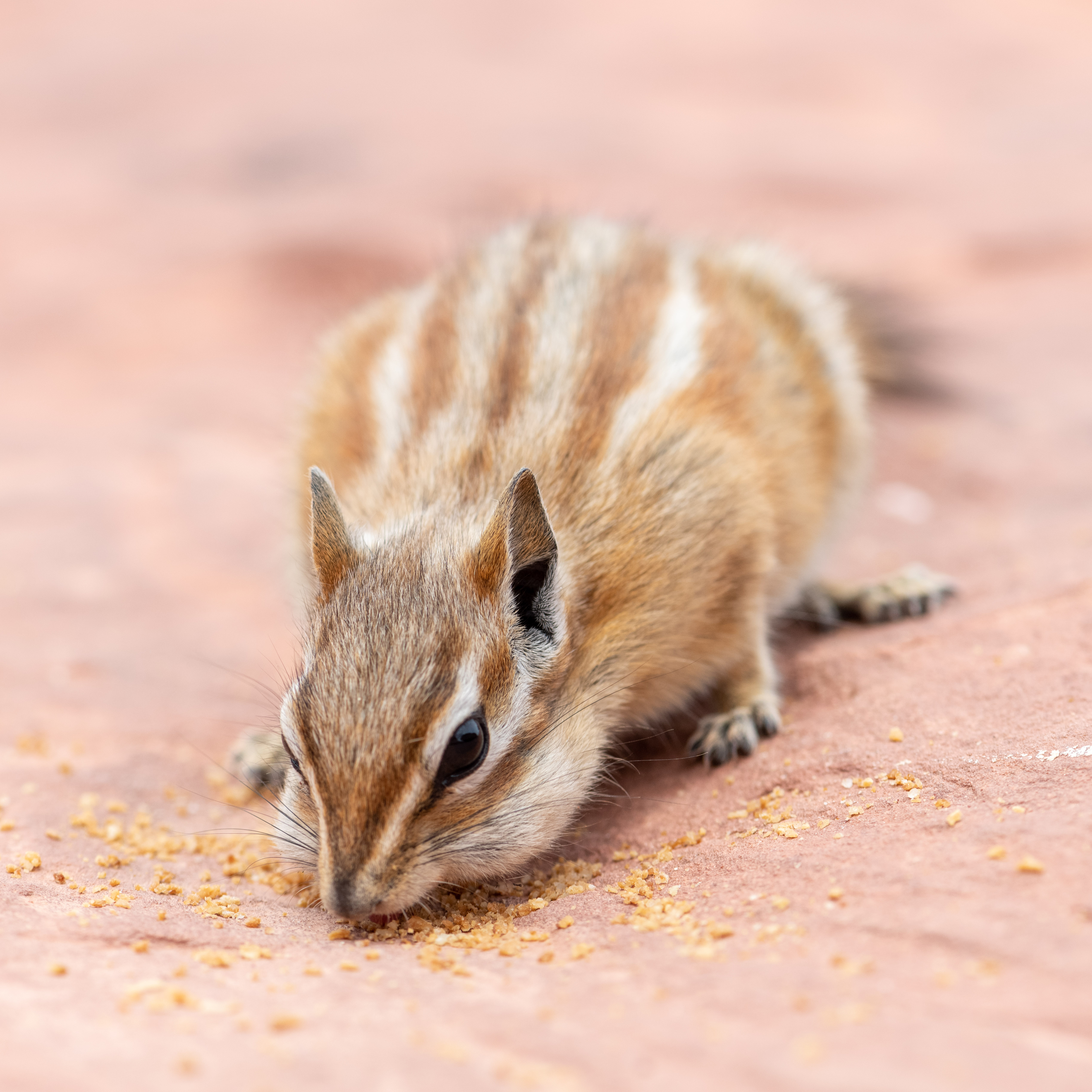
Chipmunks are everywhere !


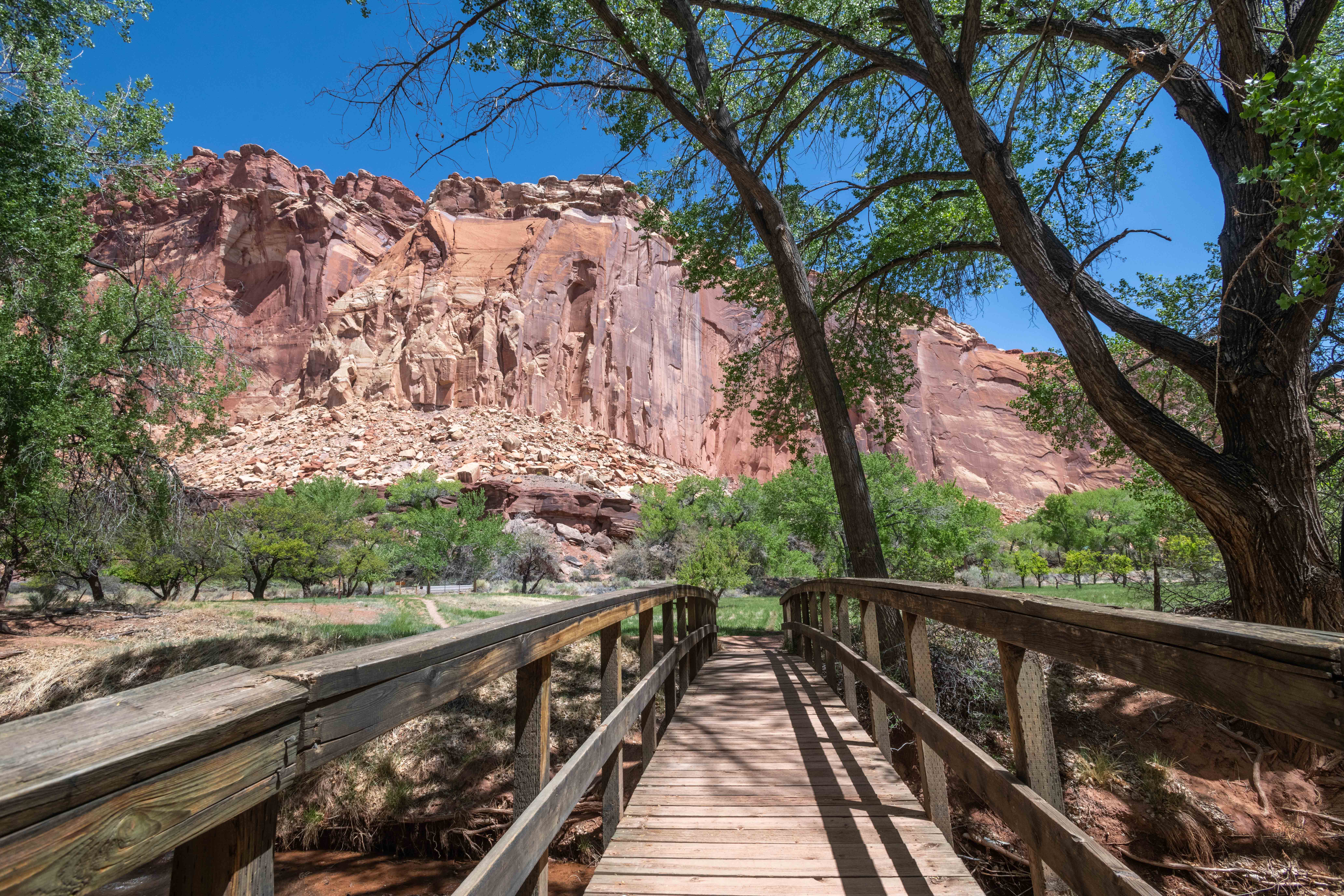
The Fruita (orchard) area at the entrance to Capitol Reef NP


The scenic drive through Capitol Reef NP


Everywhere you look are these immense cliffs of multi-colored layered rock


The original route along the canyon through the mountains ... a rough ride I would imagine


Wednesday, May 10, 2023

The Devils Garden Trail, Arches National Park, Utah

The Devils Garden Trail, Arches National Park, Utah

Tuesday May 9th , 2023


Shortly after we arrived in Moab, Gloria received an email from Janelle, a friend and former colleague from AZ, recommending the Devils Garden trail in Arches National Park. By the time we arrived at the trailhead on Monday it was really too late to start so we set our sites on hiking it the following day. We were up early on Tuesday and into the park before 7am. We drove with great determination (and no photo stops) to the trail-head, some 18 miles into the park. After a quick breakfast in the car we were ready and on the trail by 7.45am. The Devils Garden Trail consists of an established trail out past a number of arches, along with primitive trail that allows the route to be c completed as a loop. If you add in side spurs top visit the arches then the total length is just under 8 miles. The established trail is described by the National Park Service as “difficult” with steep climbs and exposed traverses. The “primitive” trail is described as the “most difficult” hiking in the park, with challenging route finding, scrambling above exposed drop-offs and potentially a water crossing. We were uncertain whether the do the loop and if so in which direction, or to go out and back on the established trail. In the end, we decided to go out on the established trail so that we could hit most of the sites in the morning light, and defer a decision on ho two get back until later.


The route out was beautiful … and exciting! At the first steep, intimidating section we did meet one lady who appeared to be in tears, wanting to turn back whilst her husband and daughter seemed keen to continue. There was one easy, but very exposed, walk along a knife edge, and one final challenging section before reaching the end. The side trips to the arches were great and as we reached our key decision point, we were still uncertain how we would return. I think the combination of meeting a party who had just completed the “primitive” trail and said it was beautiful, along with the desire not to repeat the exposed traverse, helped us make our decision. We wanted to complete the loop. The return leg was indeed beautiful, and for the most part not too challenging. However, there were a few sections that required padding down some steep slabs above scary drops. We arrived back at the car in just under 5 hours, really pleased that we had been able to complete this awesome hike.


I have to say that Gloria was amazing. Some of the sections were pretty nerve wracking. One part on the return leg in particular involved stepping down and across a fairly steep slab with sloping insecure footholds and serious consequences should you slip. At no time on this walk did she complain - a heroic effort!


To celebrate our success we went out to dinner at the Sunset Grill in Moab. This was another recommendation from Janelle. The food was excellent and the views from our table across the valley were impressive. We both had New York Strip steaks with baked potatoes, asparagus and salad to start, and then shared a “razzleberry" pie for dessert. It was a massive amount of food. Thanks to Gloria, who didn’t quite finish her dinner, we had steak sandwiches for lunch today!


Mike


Below are a couple of shots from the Devils Garden Trail - shown in color. The remainder of the photos are pictures of various arches, pillars and landscapes in general. I have chosen to show these in B&W, partly because I think B&W can be more dramatic and impactful, but also because it gives more latitude in adjusting brightness and contrast without ending up with distorted colors. I’d be interested to know what you think!


Gloria on the "primitive" return trail


This was the most challenging section of the hike - here a couple ascend across the slab that we had descended a few minutes previously. It doesn't look so hard from below, but it was quite intimidating from above. It's always easier going up than down, and its hard to judge what lies below a convex cliff face from above.


"The Garden of Eden"


"Double Arches"


"Tunnel Arch"


"Landscape Arch" - This span is about 170 ft across. in 1991 an 11 foot slab of rock fell from the right hand under-side. It is no longer allowed to walk under this arch.


"Double O Arch


"Dark Angel" pillar at the end of the Devils Garden trail


"Park Lane" ... it made me think of that famous road in London, partner of Mayfair in the original version of Monopoly!


Monday, May 8, 2023

Moab, Utah

Moab, Utah


Sunday May 7th and Monday May 8th , 2023


It was raining as we packed up the car and set off from the tiny house at Crawford. We had

a recommendation for a route through the Paradox valley on our way to Moab. It was

described “as a beautiful drive unlike the highway.” The rain finally tapered off before we

stopped in Montrose for groceries. Adding ice and food to the coolers is quite a production

not to mention trying to tuck the bags of non-perishables around all the other gear. Soon

enough we were back on the road. The first portion of the drive certainly lived up to the

billing—snow capped mountains were everywhere. Some of the other sections were less

alpine but still impressive. Eventually we descended into Moab.


We knew the private campsite was going to be a bit different, more like an RV park. It is

pretty flat and graveled over but there is a picnic table, a mat on which to place the tent,

running water, showers, laundry and an ice machine. It’s a bit lacking in shade and

greenery but we hope to be having busy days and spending a limited amount of time at the

campsite. We did manage to set up a sun shade by suspending the tent groundsheet (footprint) from four posts surrounding the site


Monday was another cold morning. It certainly didn’t seem attractive to jump out of the sleeping bag! After a quick breakfast we were on our way to Arches National Park. This is one of the parks where you need a timed reservation (booked on line) to enter the park. We had arranged this the previous evening and arrived just before our 8 am entry slot—but it didn’t seem to be a big problem. Almost immediately after entering, you start to drive up hill in a series of switchbacks. The walls of red rock tower above the road. Once up on the plateau, the massive rock features appear one after another. It’s a photographer’s dreamscape. As you might imagine we did a lot of stopping! We did manage to get o the first area of arches before we needed to eat lunch!


We had a strong recommendation for a hike called the Devil’s Garden. This starts at the

end of the main road about 18 miles from the Visitor’s Center. As it turned out it was

already about 2 pm when we got to that area. We reckoned that it was too late to start that

almost 8 mile hike, especially as we were feeling quite tired. So, our plan is to go back

tomorrow and drive directly to the end of the road and start the hike while it’s cooler. Stay

tuned.


Gloria


Our campsite outside of Moab. It's a little lacking in landscaping but the facilities are good. Note the sun shade we were able to set up


I love this outdoor bathroom! There is a dog-leg entryway that you hang up an occupied chain so you aren't disturbed. There is a everything you need including sink and shower with hot water, and it's quite lovely to be outside in the sunshine!


The views beyond the campground are beautiful. These are the La Sal mountains.


We stopped at almost every pull out!


The court Tower 


The South and North windows


Lots of people were posing for photos under the arches


A double arch ... these structures are huge, maybe 100 feet diameter for the first and 50 feet for the one behind


A young guy scrambled up to the lower lip of the second arch


... more to follow ...

Saturday, May 6, 2023

The Black Canyon of the Gunnison

The Black Canyon of the Gunnison

Friday 5th - Saturday 6th May


We left Zapata Falls campground with a fair amount of excitement because we had two nights in an AirBNB cabin ahead of us. The previous eleven nights of camping had been quite challenging with limited facilities, which included no running water in some cases and no showers at most of the sites. We were really looking forward to a long hot shower!


Our next stop was Crawford, CO on the north rim of the Black Canyon of the Gunnison. This was a place I had heard was really impressive, but I actually knew very little about. We had looked into camping at the National Park but the campgrounds did not yet appear to be open. I think we were fortunate not to be camping - we had no appreciation of how much higher and cooler the weather is in this area. The overnight low for Crawford was predicted to be 27oF. It was a beautiful drive over, and we had some time to spare, so we dropped in to the tourist information center in Gunnison for suggestions. They recommended a drive up the canyon towards the Taylor Reservoir. We followed their advice and had a chilly picnic by the river, somewhat shocked to see patches of snow right down to the waters edge. The lady in the visitors center also told us that she thought the north rim of the Black canyon was still closed for the season. As with the Grand Canyon there are two discreet approaches to the Black Canyon of the Gunnison; from the south (lower elevation and more popular) or from the north (higher elevation and dirt road access). What we hadn’t figured out is that it is a 75 mile drive from one to the other. In planning our AirBNB we didn't do much research and were blissfully unaware that going to Crawford on the north side might be quite limiting. As we continued our drive westward, we reached Sapinero where the road splits with Rt 50 heading to the south and Rt 94 going to the north of the canyon. We were perplexed to see that we had only 30 miles to go to Crawford, but it would take an hour and a quarter to get their. The drive was wild … a good road, but super windy and incredible exposure for at least the first half. We finally arrived at our cabin feeling a little shell shocked and somewhat deflated by the prospect of a 150 mile round trip the following day if we wanted to visit the National Park via the south rim.


Over the next few hours, we realized that by pure luck we were actually in an excellent situation. Firstly, our cabin was delightful; a beautiful “tiny house” with living room, kitchen, king size bed and luxurious bathroom, all set on a hillside overlooking beautiful scenery. We had long hot showers, cooked chicken vindaloo for dinner and even managed to do a load of laundry. Our host Rachel gave us some good suggestions for a hike the following day and we also found out from the “interwebs” that the north rim was actually open (as of May 1st). The area north of the canyon turns out to be absolutely beautiful, all the more so at the minute because they had extremely heavy snowfall over the winter and everything is looking super-green. There are wonderful hikes, rivers and lakes, all surrounded by snow capped mountains. 


This morning we hiked the Crystal Creek trail, east of the National Park, out towards the north rim. It was a lovely walk with great views, but there were also several sections of snow and Gloria decided to pass on the final half-mile to the overlook because it involved post-holing through deep banks of snow. The view at the end was worth the effort,  but I think Gloria made the right decision. After lunch at a restaurant in Crawford we drove the dirt road up to the north rim and hiked out the trail to Exclamation Point. It was an easy walk and the views at the end were breathtaking. The Black Canyon of the Gunnison is at some points over 2800 feet deep and less than 1200 feet from north to south rim. It is scary just to walk up to the overlooks for the view. The light wasn’t brilliant today, particularly in the afternoon, and to be honest I don’t know what the best lighting situations would be, but I do know that my photos don’t do justice to how spectacular this place is. 


We move on to Moab, Utah tomorrow and we had considered a side trip back to the south rim, but having seen such great views today I think we decided not to do that. On the advice of people we met on the trail we do plan to drive to Moab via Paradox Canyon. More on that later …


Mike


The view from a pullout on Rt 94 heading up to Crawford


Gloria heading along the Crystal Creek trail


Looking westwards from the overlook at the end of Crystal Creek Trail


The south rim from the overlook at the end of Crystal Creek Trail


The Black Canyon from Exclamation Point - note the river at the bottom


Chasm View - 2000 + ft cliffs


A rare photo of Mike at Exclamation Point (Photo by Gloria)


Heading back to our cabin above Crawford along the National Park dirt road 


Looking north towards Needle Rock and the snow capped peaks beyond


Thursday, May 4, 2023

The Continental Divide and Great Sand Dunes National Park

 The Continental Divide and Great Sand Dunes National Park


May 3rd and 4th, 2023


Leaving Mancos, we traveled eastward, stopping at the Pastorius Reservoir for a few hours of birding.  Our onward route took us over Wolf Creek Pass at 10,800 feet.  This was the Continental Divide.  My understanding was that all water east of the Divide ran to the Mississippi.  However, I’m starting to doubt that assumption.  After a long decent from the pretty scary pass (lots of snow and cascading water), we came to a flat region that stretched for about 60 miles.  (There was plenty of evidence of farming on a grand scale.) The eastern edge of this plateau was bounded by some very tall, snow-capped mountains.  Somehow I don’t think any water from this plateau is flowing over those 14,000 ft peaks!


Our drive ended at Zapata Falls campground.  This area is managed by the Bureau of Land Management (BLM).  The campsites are tucked into the foothills of the mountains in a pinyon-juniper forest.  To the east, the views are of towering peaks, to the west the vast plain and the snow-capped mountains of the divide.  The only downside is no drinking water! Thankfully our jerry can was fairly full. 


After setting up the tent, we walked up to the Zapata Falls. Perhaps I should say that Mike walked up to the falls.  This waterfall is in a canyon of sorts and amazingly enough there was thick ice underfoot.  At some point I could peak around the rock and see the base of the frozen waterfall, I wasn’t brave enough to walk on the slick ice up to the base! Underneath the ice you could hear the creek flowing.  At some point this ice bridge will collapse, thankfully not while we were up there. 


After a chilly night with rain and wind, we set off to Great Sand Dunes National Park.  It’s quite hard to describe these massive dunes that rise up on the other side of a stream.  The highest areas are about 600 ft.  There are some 30,000 acres of dunes.  The dunes result from sand being blown by the prevailing westerly winds and getting trapped against the mountains.  Streams from the mountains wash back sand onto the plains which is then blown back onto the dunes in an endless cycle. It’s truly amazing looking.  Many people climb the dunes but walking on that soft sand is difficult, so we didn’t go all the way up. Wading back across the stream, we got into an area of “quick sand”.  We were sinking fast—I hadn’t pictured that as a possibility.  It’s just another thing for the worry box! We had an early dinner with a view to going back into the park for sunset photos.   


Gloria 


An alternative method of birding the Pastorius resrvoir


Zapata Falls. This image was created using High Dynamic Range (HDR) techniques, where multiple exposures of the same image are merged to make the most of light and dark areas. This was needed because it was bright near the opening of the chasm and dark within. I decided to return this evening in the dark to re-shoot the shot using flashlights. The water was flowing much faster and there were holes visible in the ice. Just as I was working the first shot, not far into the chasm, there was an incredible crash. My guess is a large part of the waterfall ice collapsed ... I retreated rapidly!


Clouds roll in from the plains at sunset on the first night. We got a few sprinkles but there was fresh snow higher up the mountain


It proved to be an incredible, but short lived sunset


Sunset on the first evening


Moonlight over the ~14,000 foot peak behind us.


Gloria relaxing at our campsite at 9,000 ft on the second afternoon


The amazing sand dunes 


The scale is hard to appreciate


Perhaps my favorite shot - the dunes in B&W - shot from an overlook up a mountain to the east. If you look carefully you can see three people (dots) about a quarter of the way up, just left of center