Wednesday, March 19, 2025

Great Inagua

 Great Inagua


Sunday 16th - Wednesday19th March, 2025


Most of Sunday, we rested and read our books.  Carl and Diane from S/V Sonas stopped by to invite us for a “sundowner”.  Sonas was the boat we could see about five miles away during the passage from the DR.  We went over and spent a pleasant late afternoon chatting and enjoying some fantastic snacks. One persistent topic of conversation was what to do about the incoming northwesterly winds.  We were leaning toward tucking in close to the north shore of Man of War Bay and riding out the weather.


Monday morning we motor-sailed down to the harbor off Mathew Town.  On the radio, we were puzzled  by some conversations about a boat blocking the harbor entrance.  Once we got close in the dinghy, it became apparent that a supply ship was unloading in the small harbor.  There was enough room for a dinghy to squeeze past the bow of the ship but no large vessel could possibly enter.  This explained the navy vessel that had overtaken us en route and was now anchored off the town. After tying up the dinghy to the very high docks, we were met by Antonia from the tourism office!  She advised us about the location of Customs and Immigration, the local grocery store and the availability of free wi-fi at various spots.  We chatted to her about the possibility of an island tour in the afternoon.  She gave us her contact details to try to set something up.  Off we went to Customs and Immigration.


The Bahamas now has an on-line system for initiating the check-in process.  Mike had tried to access that system but our phone connectivity was poor and the system is not totally intuitive.  It turns out he was trying to do completely the wrong thing! The Customs officer seemed quite helpful and soon we were finished.  The next boaters in line chatted to us about the weather.  They said that Man of War Bay was unlikely to provide enough protection from the swell “as it always wraps around”.  Immigration was fairly straightforward, the helpful chap pointed out that we might wish to “over estimate” our length of stay as an extension would cost $200 per person!  In the end, they granted us a stay of 90 days, more than we need.


We got back in touch with Antonia and managed to set up a tour for four o’clock.  We went back to Cotinga for cameras, binoculars and more water.  A wander around the town (taking pictures) filled the time until our tour should start.  Our tour guide, Casper Burrows,  picked us up in his truck.  We stopped by his house for the scope and set off.  First up was the area around the Morton Salt plant.  The area of salt pans was staggeringly large.  The sea water is pre-concentrated in a series of steps that I didn’t fully understand, but takes about two years.  Then the saturated salt solution is pumped into the crystallizing “dishes” of perhaps an acre each.  As the water evaporates, the salt is deposited on the bottom.  Once the salt pack is thick enough any excess brine is drained off and heavy equipment is used scrape up the salt.  Naturally, this isn’t the most pure of salt.  Thankfully, it’s used to treat snowy roads in the north, not for table use!


Once past the salt operation, we drove through an area of mangroves with shallow water.  Here we started to see birds.  A few flamingos appeared to whet the appetite.  We saw many roseate spoonbills, great egrets, snowy egrets, least grebes, pied billed grebes, white cheeked pintails, blue winged teal, a sora, kingfishers, black necked stilts, green herons, reddish egrets (dark and white morphs), great blue herons, pelicans, osprey, black bellied plover, snowy plover, killdeer, kestrel, burrowing owl.  I’m sure I’ve forgotten a few!  We thought we saw at least 25 species during the 3 hour trip. Not only were there many species but also so many birds all over.   Most amazing were the sheer number of flamingos.  On a few mangrove “islands”, at a great distance,  one could see this pink haze.  Through the scope, the birds could be seen.  Casper estimated that there were about five thousand birds between the few areas.  He explained that the eggs are incubated for 28 days and the first birds had been nesting that long.  He thought there might be some chicks already with other nests more recently constructed.  


The sun was setting before we got back to the dock. We decided to stay overnight outside Matthew Town. We got the engine off the dinghy, hoisted the dinghy on the davits and generally got ready for an early departure in the morning.  Our plan was to go around to the south of the island to an anchorage behind the Molasses Reef.  


In the morning the wind was very light.  We pulled up the anchor and motored around to the south and entered the anchorage from the east.  No sooner had we got settled than a squall blew in bringing rain and the start of the winds from the northwest.  The anchorage developed a lot of white caps with winds about 20 knots.  Slowly over the afternoon the winds diminished down to about 10 knots.  Today there’s residual swell and still some wind from the northeast.  We are trying to formulate our plans for the next phase of the journey.  Today though we need to repair a small hole in the mainsail.  Fingers crossed!


Gloria


20 55.308 N, 73 36.563 W


Looking north to the anchorage off Matthew Town


The supply freighter that was parked almost completely across the harbor entrance provided some cool 'rusty boats and bits' photos


We liked this community building at the local playground - painted in flag colors


The road across the salt pans


Lake Rosa is not always wet. For the previous three years large sections of it have been dry, but this October heavy rains re-filled it (and diluted / dissolved the salt production). Flamingo nesting is greatly reduced in dry periods


Looking back along the road we drove by Lake Rosa


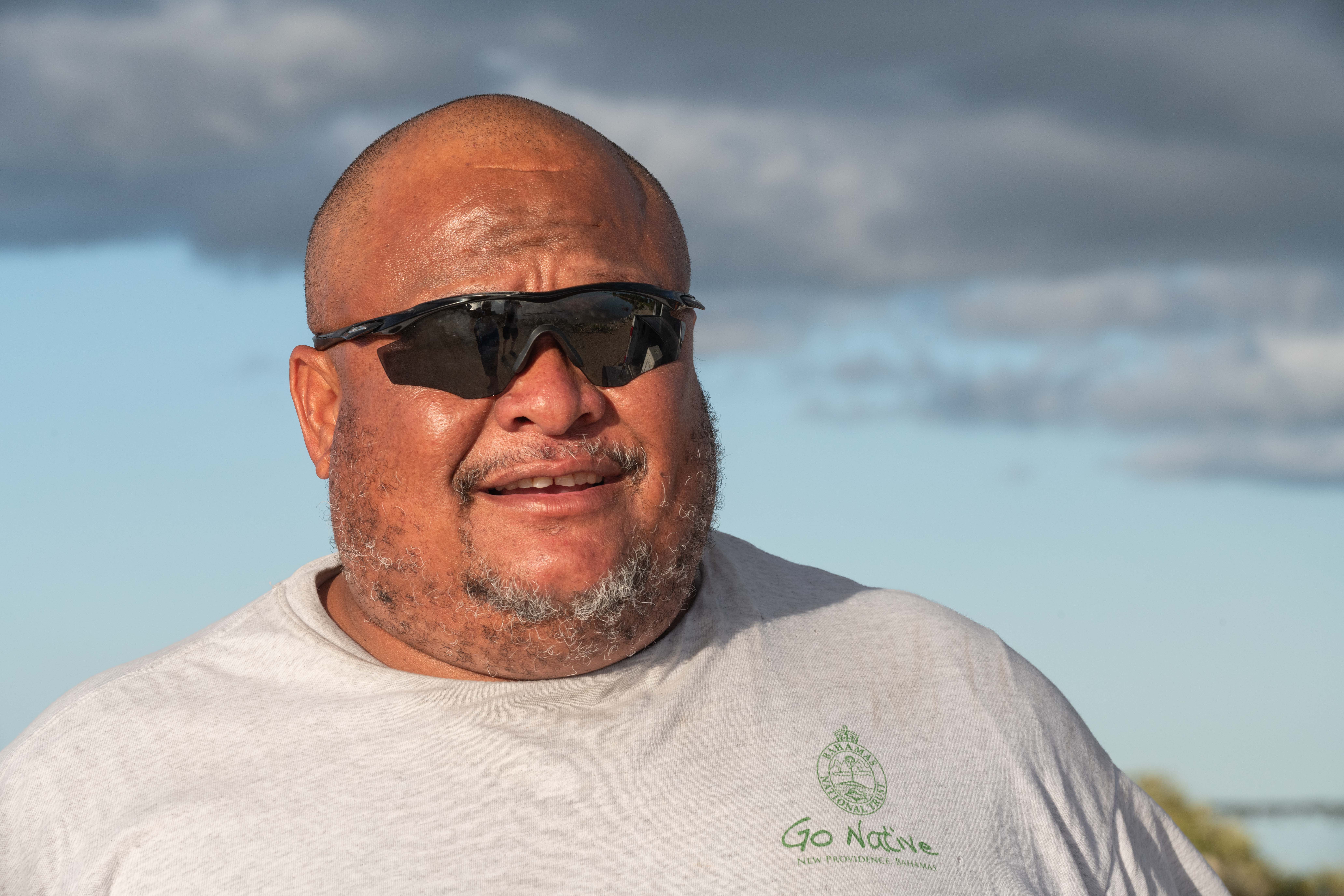
Casper Burrows, local tour guide, National Park warden and one of the most impressive birders we have ever met.


Flamingos in Lake Rosa


Ditto


Salt piles awaiting export. Casper estimated only 3-4 shiploads remain until they produce another batch


There were 11 boats in the Molasses reef anchorage last night. Most had arrived the previous day, but three boats, including ourselves, stayed off Matthew Town and motored around in the early morning


The Molasses reef anchorage is huge but completely open to the east - through south west. It is protected from the north. It took us two attempts to find a spot where we were reasonably happy we would not drag our chain across small rocks and patches of coral. You can easily see the bottom in 25 feet of water.


Sunday, March 16, 2025

Passage to Great Inagua

Passage to Great Inagua

Friday 14th - Saturday 15th March 2025


We departed Ocean World Marina in the DR at 7am on Friday and sailed north-west to Great Inagua, Bahamas, arriving at 4pm on Saturday. Rather than write our typical blog-style we thought we would try and capture a few thoughts about how we planned and executed this 195 nautical mile / 33 hour passage …


Departure planning: At this stage in our journey we have reached the area where we can expect weather systems to be moving off the coast of Florida with regularity, and we need to be planning two steps ahead. We selected Great Inagua as our destination because it is the southern most location in the Bahamas where we can check-in with customs and immigration … and it has flamingos. We intended to leave on Thursday morning and expected the journey to take about 36 hours, which would allow us to check-in on Saturday, hopefully take a quick tour of the island, before moving on to a location with anchorages that are better protected against the NW winds that are expected early next week. Then we found out that Great Inagua customs and immigration isn’t open on the weekends, and unless we travelled fast (which probably meant motoring the whole way) we weren’t likely to be there in time on Friday afternoon. Navy regulations in the DR stopped us from leaving earlier (Wednesday night) and so we postponed departure until Friday morning, hoping for a leisurely sail, arrival on Saturday, rest Sunday and check-in Monday. In planning our routes and departures we use Predict Wind. It uses a vast array of weather information along with your boat “polars’ (expected speeds under different conditions) to generate a specific route and expected winds and sea states. We also tell the program we will motor at 5.5 knots if our speed falls below 4.5 knots. Four different models gave us slightly different predictions of how long the journey would take and what proportion would be sailing versus motoring, but all seemed quite promising. As it turned out, winds were on average lower than we expected.


Sailing style: We were somewhere between dead down-wind or on a broad reach for the entire trip. Wind speeds ranged from 5-12 knots and the seas were around 3 feet. We tried really really hard to sail as much as we could. At times we used our mainsail and Genoa “wing-on-wing” with the Genoa poled out, either downwind or “sailing by the lee”. We also tried switching the pole over to the same side as the main when the winds went a little further forward, and then dropped the pole when the apparent wind came close to 90 degrees. When necessary we switched on the motor and ran that at low rpm just to supplement the sails. I am not a patient human being, but I tried very hard just to sit back, relax and let the wind do its job. Cotinga is a great sailing boat and even sails well in light air, particularly on flat water. The problem is that when you have a swell the boat rolls around and it’s hard to keep the sails filled and avoid them slapping around. When all was said and done we still ended up motor-sailing 2/3 of the time, which was a bit disappointing. We would have done better with our spinnaker, but it’s hard to deploy from our basement in Sudbury!


Passing the time: It’s hot and soporific in the cockpit during the day. We chat a bit, but not too much. We briefly worked on a crossword, and in the evening, when one of us was resting, the other would listen to an audio book or music. Mostly we just zone out and watch the waves go by. On some trips we see quite a lot of wildlife, but on this trip we saw relatively little - just one masked booby, one bridled tern and a beautiful white tailed tropic bird. There were quite a lot of flying fish and, of course, we tried fishing. Nothing more to say about that! 


Comfort: As I mentioned, it’s hot in the cockpit and we did put up an extra shade during the day on Friday. We also wear long shirts just to help protect against the sun. At night it gets surprisingly cool and we add layers - fleece top, long pants, foul weather jacket. We did a 2-hour on / 2-hour off watch schedule during the night, and on this passage we just ‘slept’ out in the cockpit. Overall, you don’t get enough sleep and it’s a really tiring experience. This was a pretty smooth passage, but even so, there are periods when the swells kick-up and you get rolled around a bit. Working down below, cooking or cleaning up,  can be a bit of a challenge because the motion feels worse down there and it’s really hot and airless. Consequently, we try and prepare food in advance and we made a ground beef, cabbage and caraway stew before leaving (which was delicious). We also ate sandwiches for lunch and croissants for breakfast. Hot coffee is a gift from God!


Traffic and Radio Issues: A lot of marine traffic comes out of Florida and heads down the northeast coast of Cuba and on past Hispanola. The area between the DR and Bahamas is a busy waterway and we saw countless large vessels. The AIS (Automatic Identification System) is invaluable. For example, we picked up one heavy cargo vessel about ten miles out from us, heading directly towards us. His AIS symbol appeared on our chart plotter as soon as he came within VHF radio range. Ten miles is a long way out, but he was traveling at 14 knots and we were sailing at 6 knots and so we would meet head-on in 30 minutes. If you ‘click’ on the AIS symbol you get all sorts of useful information such as name, course, speed over the ground and calculated closest point of approach. In this case, we chose to make a 20 degree turn to the left, which he would have been able to see on his chart plotter, and he responded by making a corresponding turn away from us and passed quite safely like the proverbial ships in the night that we were. Had we needed to, we could have called him by name on the VHF radio to discuss our plans. We currently have some unresolved issues with our main VHF radio due to interference when the engine is running (it’s fine when we are sailing). Therefore, we keep a second hand-held VHF radio in the cockpit. For the last couple of days we have also been experiencing some really loud, frequent and unpleasant noise on channel 16, the hailing and emergency channel that everyone monitors, regardless of whether we are sailing or motoring. We thought it might be our radio but another sailing vessel called us to ask us about the problem, which was also bothering them. They later told us that some research on the inter-webs had revealed that this is a persistent problem off the coast of the DR that is likely due to a faulty relay station (coast guard) that has been going on for years! Happily, we had no other technical issues during this passage.


Photography: I feel like I have already taken every shot aboard Cotinga that I will ever want to take … but it was such beautiful evening with a full moon and relatively gentle seas, that I was inspired to get out my camera and tripod. The tripod is essential as exposure times are long (30 seconds in the case of the shots below). I also used a flashlight to add extra foreground light in a couple of the photos. My life jacket is clipped in to a tether when I’m out on deck taking photos, as it is most of the time in the cockpit when we are sailing offshore.


Arrival: The last few miles seemed to go on forever. We had an anchorage planned out, but as we rounded the western side of Great Inagua the winds turned north, which was totally unpredicted by any of the weather forecasts, and so we had to go a little further to find a sheltered spot on the north side of Man of War Bay (see lat/long below). The water is crystal clear and you can easily see the bottom in 20 foot depths. We were careful to choose a sandy spot and to avoid the occasional rocks that we could see scattered around. It’s not a concern that we would bang into them as they are too deep, but we were worried that we might get the anchor chain wrapped around them. We were happy that it was still bright daylight. After squaring away the boat, we had a cold drink, took a quick swim and showered, then ate a fine meal (super spicy ramen noodles with brocolli, peppers and Korean barbecue beef) with a couple of beers, before crashing into a long deep sleep.


What’s next: We will rest today (Sunday) and then sail back to Mathew Town (~ 8 miles) and check-in with Customs and Immigration on Monday. We do not have enough time to move on from Great Inagua before a front comes through Monday night, bringing strong north or north-westerly winds. We plan to go round the south west corner of Great Inagua to take shelter behind Molasses Reef … “a vast anchorage offering protection from cold fronts for those willing to pick their way around coral heads”. Not a ringing endorsement, but at this point our choices are limited …


Mike and Gloria


21 05.030 N, 73 38.836 W


Cotinga at the dock in Ocean World Marina, DR


Post sunset - Friday evening


It was a beautiful night for sailing ... early in the evening with the full moon at our stern


Looking back with the moon behind


Late in the evening sailing into the moonlight


Gloria at the end of the last off-watch period Saturday early morning


A beautiful sunrise Saturday morning


At anchor on the northern side of Man of War bay. The wind was from the north when we arrived ... it turned south east by  following morning and we managed to snag the chain around a rock and needed to pull up and re-anchor


Thursday, March 13, 2025

“Six days and seven nights” with Mike and Gloria

Six days and seven nights” with Mike and Gloria


As many of you know, it has been a long standing tradition to have our visitors write a guest blog. Here is Dave’s entry …


I just stepped off Cotinga after a whirlwind tour of the Dominican Republic spending a week with Mike and Gloria.  They made my transit way too easy by picking me up at the Puerto Plato airport in their rental car, and gamely weaving back to the boat through scooters and trucks and road construction and all kinds of mayhem.  An extra day with the car enabled us to eat out (excellent food!), stock up, and visit a beautiful and remote beach (Playa Rincon) that was not accessible to Cotinga.  The DR has 14 national parks, and we spent three remarkable days in a protected bay in Los Haitises park. We motored the little DD all over the place, one day up a fantastic river into the Mangroves (shaded with overhanging branches and more birds than you can shake a stick at). The mangrove river tour is a treat for park visitors (who are usually guided, arrive by bus, and travel by boat across the bay to the caves).  Another day we explored three different limestone caves (see Mike's outstanding photos!).  Each day we started the evening with a beautiful look shoreward at the three dimensional karst topography cast into greater relief by the long shadows of the end of the day, another great meal (mustard crusted salmon was over the top), and then a relaxing sit in the cockpit with a few wisecracks from Gloria about the wackiest parts of the day, staying awake just long enough to find Sirius and the dipper and the North star, and look for the aligned planets before turning in.  Departing Los Haitises we headed back to the Puerto Bahia resort and prepared for an overnight westward leg. The 115 miles were just long enough to make it real and make me feel like I was helping get Cotinga closer to home.  We left around 1700 and got to Ocean World (west of Puerto Plata) around 1100 the following day, We motored or motor sailed most of the passage, not without excitement as the entire navigation and electronics system shut down around 2230. Things were sporty as we were on a lee shore at night in the tropics where there are few lighted navigational aids, but we had a good half-full moon and our trip west was across safe bays from one cape to the next.  Mike was quick and efficient in setting up a backup Navionics plotting package (with GPS) on the iPad, and a paper chart backup with handheld GPS fixes penciled in for additional redundancy.  Off watch I went back to sleep wondering how we would get into the harbor on a lee shore without the depth sounder, but Mike got the NMEA2000 network back online just after dawn. Things like this remind me how much skill and experience Mike and Gloria have accumulated. 


The following day in Ocean World we rested, I was able to download the Caribbean bird pack into Merlin and tick some of the cool birds that Gloria and Mike pointed out (fav is the tody of course) and did some boat chores. Mike checked and replaced the water pump impeller, finding that only two of its 12 paddles remained. We were pretty lucky as an overheated engine without navigation on a lee shore would have really tested us.  The national motto of the DR is, "DR has it all" and it rings true - what a fantastic country. I only mention the movie (Six Days and Seven Nights) because it has such a tropical vibe, and our seven days were so tropical in all ways, from beaches to birds to lush vegetation to hills and caves, turtles and whales, muddy shores and blue water sailing.  In Los Haitises we even encountered a film crew setting up to shoot an episode of Survivor or something similar, where a young filmmaker with a headset and radio asked us if we could 'come back later'! 


Dave


All photos from Dave …


It's hot in the cockpit!


Mike relaxing at Puerto Bahia Marina


Gloria in her cruisers attire


Heading east out of Samana Bay at sunset


Tuesday, March 11, 2025

Ocean World Marina, Puerto Plata

Ocean World Marina, Puerto Plata

Sunday 9th - Tuesday 11th March 2025


The overnight passage from Samana round to the north coast of the Dominican Republic was pretty mellow, but not without drama. The winds were really light, so we ended up motor sailing the whole way. There were clear skies and the moon was bright for most of the night. Dave, Gloria and I decided to alternate watches, with 2 hours on and 4 hours off throughout the night. Just before midnight, Gloria was on-watch and I was dozing in the cockpit when I heard a faint beeping sound. Gloria told me the electronic navigation system had lost the GPS position. It quickly became evident that all the instruments were down - wind, speed, depth, heading, course over ground, AIS … and most critically our position. I went below to try and figure out what was going on, but couldn’t identify the problem. We switched on the iPAD which has its own GPS sensor and Navionics charts loaded. We also got out handheld GPS devices (one of which was brand new and needed charging) and we started plotting our position on paper maps. Fortunately, the autopilot gets its heading direct from the rate-compass, and although we couldn’t see the heading on our instruments, the autopilot kept steering true. We adjusted our approach to using these alternate navigational tools and continued through the night. In the morning, based on a suggestion from Dave, I started pulling apart and re-attaching connections in the cable network for the instruments. Somehow, I was able to get the system started again. We are putting it down to a poor connection, but we aren’t really satisfied as we don’t feel we have fully identified the problem. There are a few lessons we can learn from this experience: firstly, we are very reliant on our electronic systems; secondly, it’s good that we have independent back-up systems; thirdly, it would have been better if we had been prepared to use those back-up systems (ready and available, fully charged, waypoints pre-entered etc).


We arrived at Ocean World Marina around noon and were soon tied up on the dock. Thankfully, no docking nightmares this time! We were shepherded along to the office to clear in with the marina and navy personnel. We didn’t get much done the rest of the day because we were all exhausted.


The marina is interesting - we chose to come here because it’s close to where Dave needs to go and it has customs and immigration on site, which will help our departure. There is a mixture of cruising boats and  what appears to be longer term storage boats. We were shocked to see a power boat sunk at the dock. This was not some old junker but a large Sabre cruising yacht. It looked like it had only just sank and this morning we saw a team of divers and marina staff hard at work to re-float her and pump her out, which they were able to do in a couple of hours. I heard two different versions of what had happened; the first was that an engine or prop shaft leak had caused it to sink; the second, which I heard direct from one of the divers, is that the rudder shaft had snapped and the rudder fallen off, leaving a whole in the hull. To me it seems shocking that you might leave your boat in the safety of a marina only to have it sink! I have no idea what might be entailed in bringing the boat back to serviceable condition. 


Dave departed shortly before lunchtime to spend a couple of days in Cabarete exploring the foil boarding scene. He is an avid windsurfer turned foil boarder and is keen to return to Cabarete in the future on a longer boarding trip. We are sad to see Dave go - we’ve had a fabulous time with him on board this past week. He has promised to send us his guest blog tomorrow!


Mike


19 49.652 N, 70 43.814 W


Sunset behind us as we head east out of Samana Bay


Sunrise also behind us as we now head west along the north coast of the DR


The sun climbs up into the clouds creating dramatic light


Spirit of Chemainus ... a beautiful boat, built in vancouver, but bought in Italy by the current owners and sailed to the Caribbean.


A beautiful Sabre power boat - sunk in the marina


Divers were able to get her floated using airbags and then pumped out


It sounded like the rudder post snapped and the rudder fell out leaving a gaping hole


Sunday, March 9, 2025

The Potty King

The Potty King

Saturday 8th - Sunday 9th March 2025


Many people take care of their bathroom business first thing in the morning, but not everybody gets ripped in to serious toilet repairs before breakfast! A couple of weeks go I rebuilt the pumping mechanism of our aft toilet and cleared the attached septic hose. However, we still had a slight leak and it also seemed like there was a build up of pressure when pumping overboard. I solved the leak a couple of days ago and figured out that the section of hose downhill of the anti-syphon loop and closest to the overboard thru-hull must be partially blocked. So this morning, immediately after morning coffee, I closed the thru-hull valve and took out the offending section of hose. OMG … the 2 inch hose was blocked to 1/8 inch with crystalline sediments. I cleaned these out with a wooden stick and mad sure the thru-hull was also clear and re-assembled the system. It works beautifully … for now! I should add that I showered between completing this project and eating a leisurely breakfast of coffee, bananas, warm croissants and raspberry jam. It’s a rough life!


Yesterday was another spectacular day in Los Haitises National Park. We moved Cotinga for a change of scenery and anchored closer to the caves. We then took the Dainty Dog up another mangrove lined inlet and left her at a small stone dock. A moderate and confusing walk through the forest brought us to Grey Owl cave. At first we weren’t sure we were in the right spot as it looked just like a cleft in the rock, but when you follow the narrow gap you find yourself inside a large cave lit up by a hole in the roof. We were also happy to see once again the beautiful broad billed tody.


After lunch we dinghied back up the mangrove river as far as you can get (see previous blog entry), parked at the dinghy and walked up the road to the Paraiso Cano Honda resort. What an amazing place. We had to pay a small fee to get in and walk around, but the grounds and buildings are spectacular and we had the option of swimming in any one of the many cascading pools that are fed by the nearby river. It was well worth the trip.


One returning to Cotinga we were waved over by neighboring cruisers aboard the catamaran Arabella and stopped by for a drink. Paul and Jo are from Cape Town, South Africa and have been traveling since 2023. Their friends, Benje and Deb, from the adjacent monohull Makarios, are from Thermopollis, Wyoming and have also been cruising for a couple of years. We are all heading northwards through the Bahamas, so hope to meet up with them again. 


We are now anchored outside the Puerto Bahia Marina, where we spent 6 days previously. We have updated our “Despachio” and are now cleared to sail around to the north coast of the DR. We plan on leaving around 6 pm and expect the journey to take about 20 hours


Mike


19 11.656 N, 69 21.691 W


The inlet leading to the dock for Grey Owl Cave


The entrance to Grey Owl Cave


Gloria and Dave in Grey Owl cave


The top of the cleft Grey Owl Cave


This photo won't win any awards but here is the lovely broad billed tody (hummingbird size)


Rice farmers near the Paraiso Cano Honda resort


The view back to the mangrove river and the bay beyond from the Paraiso Cano Honda resort


One of a dozen or so waterfalls that sit above swimming pools in the Paraiso Cano Honda resort


A wasp that I spotted working on a nest in the grounds of the Paraiso Cano Honda resort